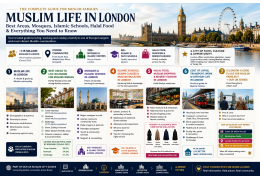
Muslim Life in London: A Community at the Heart of the British Capital
London is one of the most important cities in Europe for Muslim life. International, multicultural and home to communities with roots across South Asia, the Middle East, Africa, Europe and beyond, the British capital offers Muslim families an environment where mosques, halal food, Islamic education, Muslim businesses and community services are part of everyday life in many neighbourhoods.
According to the 2021 Census, around 1.32 million London residents identified as Muslim, representing approximately 15% of the capital’s population. This makes Islam the second-largest religious affiliation in London and highlights the scale of the city's Muslim community.
But Muslim life in London is not concentrated in one single area. Different boroughs have developed their own communities, mosques, schools, restaurants, shops and cultural identities.
Where are London's largest Muslim communities?
East and North-East London are particularly important.
According to 2021 Census data, Muslims represented around 39.9% of residents in Tower Hamlets, 34.8% in Newham and 31.3% in Redbridge. Areas such as Whitechapel, Stepney, East Ham, Forest Gate and Ilford therefore frequently appear when Muslim families research where to live in London.
However, numbers alone should never determine where a family chooses to settle.
A neighbourhood with a large Muslim population may provide excellent access to mosques and halal businesses, but families should also consider housing costs, schools, commuting times, public transport, green spaces and the overall environment for children.
London offers many different ways to experience Muslim life
There is no single “London Muslim community”.
A family living near Whitechapel may experience London very differently from one based in Ilford, Harrow or another part of the capital. Some areas offer dense clusters of halal restaurants, Islamic centres and Muslim businesses, while others provide a quieter residential environment with community facilities only a short journey away.
This diversity is one of London's greatest strengths.
It allows families to look beyond the simple question of “Where do most Muslims live in London?” and instead ask a more useful question:
“Which part of London best fits our family's faith, education, work, housing and lifestyle needs?”
How does London compare with other UK cities for Muslim families?
London is only one part of a much larger Muslim landscape across Britain.
If you are considering several destinations, start with our guide to the best UK cities for Muslim families, where we explore Muslim communities, mosques, Islamic schools and quality of life across different British cities.
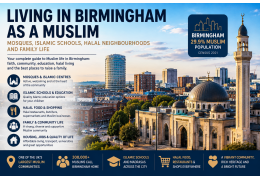
Birmingham is another major option and an important part of our UK series. Our detailed guide to Muslim life in Birmingham, including neighbourhoods, mosques, Islamic schools and halal living provides a useful comparison with London.
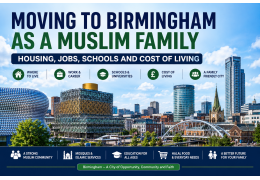
For families seriously considering relocation, we have also prepared a separate guide to moving to Birmingham as a Muslim family, covering housing, jobs, schools and cost of living.
What will this London Muslim guide cover?
Throughout this guide, we will look beyond general statistics and explore the practical questions that matter to Muslim families:
Which areas of London are worth considering? Where are the major mosques and Islamic centres? What options exist for Islamic schooling and Quran education? How accessible is halal food? Where can Muslim women find abayas, jilbabs, khimars and niqabs? And how much does everyday family life in London really cost?
In the next section, we begin with one of the most important questions for anyone considering a move to the capital:
What are the best areas in London for Muslim families?
Best Areas in London for Muslim Families
Choosing the best area to live in London for a Muslim family involves much more than finding the borough with the highest Muslim population. Access to mosques, halal food and Muslim businesses can make everyday life easier, but families also need to consider housing costs, schools, transport, commuting time, green spaces and the overall environment for children.
Several parts of East and North-East London stand out because of their well-established Muslim communities. According to the 2021 Census, Muslims represented around 39.9% of residents in Tower Hamlets, 34.8% in Newham and 31.3% in Redbridge.
These figures help explain why these boroughs frequently appear when people search for Muslim areas in London or the best places to live in London for Muslim families.
Tower Hamlets: One of London's Most Established Muslim Communities
Tower Hamlets is one of the first boroughs many people associate with Muslim life in London.
Areas such as Whitechapel, Stepney and Bethnal Green provide access to mosques, halal restaurants, grocery stores, community organisations and excellent transport connections.
Whitechapel is particularly significant because it is home to the East London Mosque and London Muslim Centre, making the surrounding area an important hub for Muslim community life.
Its location is another major advantage. Tower Hamlets sits close to the City of London and Canary Wharf, which can make commuting attractive for professionals working nearby.
However, convenience comes with an important consideration: housing costs.
Families should therefore compare the benefits of living close to central London with the amount of living space they can realistically afford.
Newham: East Ham, Forest Gate, Plaistow and Stratford
Moving further east brings us to Newham, another borough with a substantial Muslim population.
Areas such as East Ham, Forest Gate, Plaistow and Stratford offer different combinations of residential streets, shopping areas, transport connections and community facilities.
East Ham and surrounding areas are particularly useful for families looking for convenient access to halal butchers, international grocery shops, restaurants, modest clothing and everyday services.
Stratford offers a different environment. Its major transport connections can be valuable for households where family members commute to different parts of London.
For parents, however, the decision should not be based solely on shopping or transport. The exact school catchment, journey to work and location of the family's preferred mosque can make one part of Newham considerably more suitable than another.
Redbridge and Ilford: A Strong Option for Muslim Families
Redbridge deserves particular attention from families researching where Muslims live in London.
Muslims represented approximately 31.3% of Redbridge residents in the 2021 Census, making Islam the borough's largest religious affiliation.
Ilford is especially well known for its diverse Muslim community and access to mosques, halal restaurants, grocery stores and other services.
For some families, Redbridge can provide an attractive balance between access to Muslim community life and a more residential environment than some of the busiest inner-London areas.
Transport is another advantage. The Elizabeth line has strengthened connections between areas including Ilford and central London, making location and commuting an important part of the comparison.
What About Harrow, Brent and Ealing?
Muslim families should not automatically limit their search to East London.
Parts of Harrow, Brent and Ealing also have established and diverse Muslim communities, mosques, halal businesses and good transport connections.
These areas may be particularly relevant for families whose work, relatives or preferred schools are located in West or North-West London.
This illustrates an important point:
There is no single “best Muslim area in London”.
The best neighbourhood depends on the needs of each household.
What Should a Muslim Family Check Before Choosing an Area?
Before signing a tenancy or buying a property, it is worth comparing:
-
distance to the nearest suitable mosque;
-
Islamic schools, local schools and Quran classes;
-
rent or property prices;
-
halal butchers, supermarkets and restaurants;
-
journey time to work;
-
Underground, Elizabeth line, Overground, train and bus connections;
-
parks and facilities for children;
-
proximity to relatives or an existing community.
In a city as large as London, journey time can sometimes matter more than distance. A neighbourhood that looks close on a map may involve a complicated daily commute, while another area further away may have a direct rail connection.
London vs Birmingham for Muslim Families
Families considering London should also compare it with other major British Muslim communities.
Birmingham, for example, offers a very different urban environment while still having a substantial Muslim population and extensive Islamic infrastructure.
Our guide to Muslim life in Birmingham: neighbourhoods, mosques, Islamic schools and halal living explores these areas in detail.
If relocation is your main concern, read our dedicated guide to moving to Birmingham as a Muslim family: housing, jobs, schools and cost of living.
You can also compare London with other destinations through our broader guide to the best UK cities for Muslim families.
Ultimately, the goal should not simply be to find the London neighbourhood with the largest Muslim population. It should be to find the area where faith, family life, education, work and budget can function together comfortably.
Once an area has been shortlisted, the next major consideration is the local Islamic infrastructure.
In Part 3, we explore some of the most important mosques and Islamic centres in London, and the role they can play in everyday Muslim family life.
Mosques & Islamic Centres in London: More Than Places of Prayer
For Muslim families considering living in London, access to a mosque can be an important part of choosing the right neighbourhood. Across the capital, mosques and Islamic centres range from major institutions serving Muslims from across the city to smaller local masjids deeply connected to their surrounding communities.
Their role often extends beyond the five daily prayers and Jumu'ah. Depending on the centre, families may find Quran classes, Islamic studies, Ramadan programmes, lectures, youth activities, educational services, charity initiatives and community events.
For newcomers to London, a local mosque can also provide an important connection to the surrounding Muslim community.
East London Mosque & London Muslim Centre — Whitechapel
Located in Whitechapel, the East London Mosque is one of London's best-known Muslim institutions. Together with the London Muslim Centre and Maryam Centre, it forms a major religious, educational and community complex in East London.
Its location helps explain why Whitechapel and the surrounding parts of Tower Hamlets are frequently considered by families researching Muslim areas in London.
Beyond congregational prayers, the institution provides a range of educational and community services. For a family living nearby, this type of Islamic infrastructure can be particularly valuable during Ramadan, Jumu'ah, Islamic classes and community activities.
However, proximity to a major mosque should still be considered alongside housing costs, schools and commuting requirements.
London Central Mosque & Islamic Cultural Centre — Regent's Park
The London Central Mosque, with its distinctive golden dome near Regent's Park, is one of the most recognisable Islamic landmarks in Britain.
Together with the Islamic Cultural Centre, it serves a diverse congregation and receives Muslims and visitors from around the world.
Its central location also demonstrates something important about Muslim life in London: London's Islamic community cannot be reduced to East London alone.
Muslims live, work and worship throughout the capital, and major Islamic institutions can be found across different parts of the city.
Finsbury Park Mosque — North London
For families looking towards North London, Finsbury Park Mosque is another established Islamic centre.
The mosque combines worship with religious, educational and community activities, making it relevant not only for daily prayer but also for Muslims looking to become involved in their local community.
This is particularly useful to remember when searching for accommodation. Families whose work or schools are located in North London do not necessarily need to move east simply because Tower Hamlets and Newham have larger Muslim populations.
Local Mosques Can Matter More Than Famous Mosques
London's major Islamic centres receive considerable attention, but for everyday family life, the small mosque within walking distance of home may ultimately be more important.
Before choosing a neighbourhood, Muslim families may want to check:
-
walking or travel time to the nearest mosque;
-
availability and organisation of Jumu'ah prayers;
-
Quran classes for children;
-
Islamic studies programmes;
-
activities for teenagers and young adults;
-
programmes for women and families;
-
Ramadan and Taraweeh arrangements;
-
languages used for lessons and lectures.
These practical details can make a significant difference over several years of family life.
A famous mosque located 45 minutes away may be less useful on an ordinary weekday than a strong community mosque located five minutes from home.
Ramadan in London
Ramadan in London provides one of the clearest examples of how active the city's Muslim communities can be.
Across the capital, mosques organise Taraweeh prayers, Quran programmes, charitable initiatives, community iftars and educational activities. In neighbourhoods with large Muslim populations, Ramadan can become particularly visible in local shops, restaurants and community spaces.
For Muslims moving from a smaller town or an area with limited Islamic infrastructure, experiencing Ramadan in parts of London can therefore feel very different.
At the same time, London's size means families should still plan carefully. The nearest major mosque may become extremely busy, particularly for Jumu'ah, Taraweeh and Eid.
Mosque, Home and School: Think About All Three Together
When deciding where to live in London as a Muslim family, it can be useful to think of the home, mosque and school as a triangle.
A neighbourhood becomes much more practical when all three can be reached without difficult daily journeys.
This is one reason why our broader guide to the best UK cities for Muslim families considers more than simply the number of mosques in each city. Community infrastructure, education, housing and everyday quality of life need to work together.
The same principle applies when comparing London with Muslim life in Birmingham.
For parents, however, proximity to a mosque is only part of the decision.
The next major question is often education: What Islamic schools are available in London? Are there Quran classes and madrassas? And what should Muslim parents check before choosing a school?
That is exactly what we explore in Part 4: Islamic Schools, Quran Classes & Muslim Education in London.
Islamic Schools, Quran Classes & Muslim Education in London
For many parents considering living in London as a Muslim family, education is just as important as housing or proximity to a mosque. London offers several possible routes, including Islamic schools, mainstream state schools, independent schools, madrassas, weekend Quran classes and Islamic education programmes run by local mosques.
This variety is one of the capital's strengths. However, choosing the right option requires careful research. An institution having an Islamic ethos does not automatically mean it will be the right school for every child.
Islamic Schools in London
London is home to a range of Muslim faith schools and independent Islamic schools, with provision varying by age, gender, location and admissions policy.
One example in East London is London East Academy, which operates within the wider East London Mosque and London Muslim Centre environment in Whitechapel.
Families searching for an Islamic school in London should look beyond location alone. Depending on the type of school, parents should check current admissions information, curriculum, fees where applicable, academic performance and official inspection reports.
School circumstances can change, so information should always be confirmed directly with the establishment and through the appropriate official education sources before making a decision.
What Should Muslim Parents Check Before Choosing a School?
Before choosing a school and signing a tenancy nearby, families should consider:
-
current admissions requirements and catchment rules;
-
the school's latest inspection information;
-
academic curriculum and performance;
-
Quran, Arabic and Islamic studies provision;
-
fees if the school is independent;
-
travel time from home;
-
extracurricular activities;
-
support available for pupils;
-
whether the school's educational approach matches the family's priorities.
In London, commuting time is especially important.
A school that appears reasonably close on a map can become difficult when the journey must be completed every morning and afternoon, five days a week.
Mainstream Schools + Islamic Education
An Islamic full-time school is not the only option available to Muslim parents.
Many families choose a local mainstream school and supplement their children's education through Quran classes, Arabic lessons, Islamic studies or a local madrassa during evenings or weekends.
Mosques and Islamic centres throughout London play an important role in providing this type of education.
For some households, this approach can offer greater flexibility. Parents can focus on finding a suitable local school and family-friendly neighbourhood while maintaining regular Islamic education through a nearby mosque or learning centre.
Quran Classes and Madrassas in London
The availability of Quran classes in London varies considerably from one area to another.
Some programmes focus primarily on Quran reading and memorisation, while others may combine Quran, Arabic, Islamic manners and basic Islamic studies.
Before enrolling a child, parents may want to ask about class sizes, teaching methods, safeguarding procedures, timetable, curriculum, teacher qualifications and communication with parents.
The closest madrassa is not necessarily the best choice, just as the largest or most famous Islamic school is not automatically the right one.
Choose the School and Neighbourhood Together
For families with school-age children, one of the most useful approaches is to research education before finalising the neighbourhood.
A practical order can be:
shortlist schools → check admissions → identify suitable areas → compare housing → check transport → locate nearby mosques and Quran classes.
This can prevent a family from moving into an attractive Muslim neighbourhood only to discover that their preferred school is impractical or unavailable.
It also helps explain why areas such as Tower Hamlets, Newham and Redbridge attract attention from Muslim families. In some parts of these boroughs, mosques, schools, Quran classes, halal shops and established communities exist within the same wider area.
Education Is About More Than the Classroom
For many Muslim parents, education also includes the environment surrounding their children.
A family's decision may therefore involve questions about friends, mosque attendance, youth activities, Quran learning and access to a supportive community, alongside conventional academic considerations.
Finding the right balance between these factors can be more valuable than simply choosing the neighbourhood with the highest Muslim population.
Families comparing different British cities can also read our guide to Muslim life in Birmingham: neighbourhoods, mosques, Islamic schools and halal living or explore our broader guide to the best UK cities for Muslim families.
Once housing, mosques and education have been considered, another major part of everyday life comes into focus: where to eat halal, where to shop and where Muslim women can find modest Islamic clothing.
In Part 5, we explore halal food, Muslim shopping and modest fashion in London, including abayas, jilbabs, khimars and niqabs.
Halal Food, Muslim Shopping & Modest Fashion in London
One of the biggest advantages of Muslim life in London is how easily many everyday needs can be met. Across several parts of the capital, Muslim families can find halal butchers, restaurants, international supermarkets, Islamic shops, modest clothing and community businesses without travelling across the entire city.
This is especially visible in parts of East and North-East London, including Whitechapel, East Ham, Green Street and Ilford, although halal food and Muslim-friendly services are certainly not limited to these areas.
For a family considering a move, this can make a significant difference to everyday life.
Halal Food in London: A Truly International Choice
The halal food scene in London reflects the extraordinary diversity of the city's Muslim population.
Families can find restaurants influenced by Pakistani, Bangladeshi, Turkish, Arab, Indian, African and many other culinary traditions, alongside burgers, steaks, desserts and contemporary dining concepts aimed at London's halal market.
However, Muslims have different requirements regarding halal certification and preparation. A restaurant describing food as halal does not necessarily answer every customer's requirements. Those following specific standards should therefore verify the restaurant's current halal policy or certification directly before visiting.
For families actually living in London, restaurants are only part of the picture.
Having a reliable halal butcher, grocery store or supermarket nearby can be far more important to everyday family life.
Muslim Shopping in Whitechapel, East Ham, Green Street & Ilford
Several areas have developed strong commercial environments serving London's diverse Muslim communities.
Whitechapel combines Islamic institutions, restaurants and international shops in the heart of East London.
Further east, East Ham and Green Street are known for busy shopping streets where clothing, fabrics, jewellery, food and international products can be found.
Ilford provides another important shopping environment for communities living around Redbridge and neighbouring areas.
These districts help explain why many families researching the best Muslim areas in London look beyond the number of mosques alone. Being able to reach everyday services conveniently can have a major impact on quality of life.
Modest Fashion in London
London is also an important market for modest fashion and Islamic clothing.
However, “modest fashion” can mean very different things. Some women prefer contemporary loose-fitting fashion, while others specifically look for longer, wider and more covering Islamic garments.
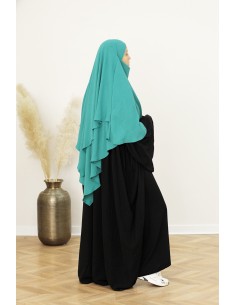
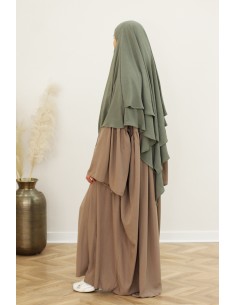
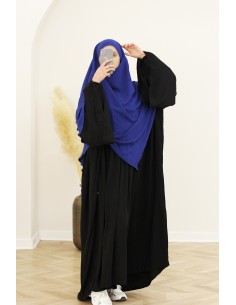
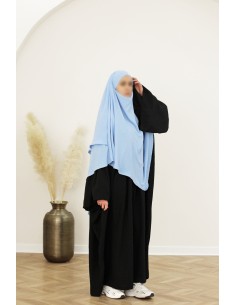
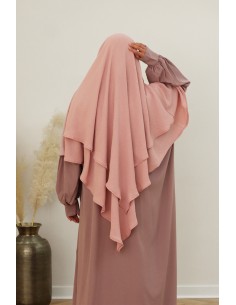
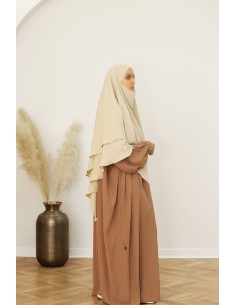
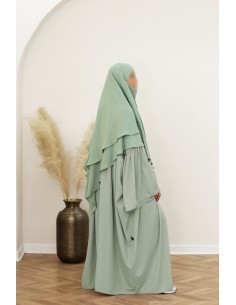
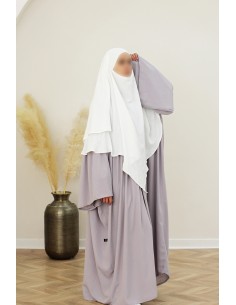
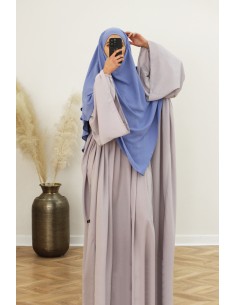
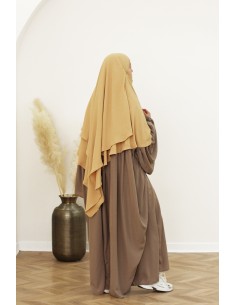
For women in London and elsewhere in the UK looking for this type of clothing, Maktaba Ahloulhadith offers dedicated Umm Hafsa collections online.
For a long and loose outer garment, explore the Umm Hafsa Abaya collection.
Women looking for additional coverage around the head, shoulders and upper body can discover the Umm Hafsa Hijab & Khimar collection.
For those who prefer an especially loose and covering outfit, the Umm Hafsa Jilbab collection offers another option.
A separate Umm Hafsa Niqab collection is also available for women who wear the niqab.
Physical Muslim Shops + Online Islamic Shopping
Living in London gives Muslim families an interesting combination of physical shopping and specialist online stores.
Local shops allow customers to see fabrics, compare products and explore different styles in person. Online Islamic boutiques can complement this by providing access to specific brands, cuts or products that may not be available locally.
This means a Muslim family does not necessarily need to live next door to a major shopping district.
For example, parents may prioritise a residential area with a suitable school and mosque while travelling occasionally to larger Muslim shopping areas or ordering specific products online.
That flexibility can considerably expand the number of London neighbourhoods worth considering.
Everyday Muslim Life Matters More Than Statistics
A borough's Muslim population can help identify established communities, but statistics do not tell the whole story.
For a family, practical questions may be much more important:
Can we buy halal meat nearby? Is the mosque easy to reach? Are there suitable schools? Can our children attend Quran classes? Can we find the products and clothing we need without difficult journeys?
When these needs can be met conveniently, everyday Muslim family life becomes much easier.
This is also why London should be compared with other major UK destinations. Our guide to the best UK cities for Muslim families explores how different British cities compare for mosques, Islamic education, communities and family life.
For a closer comparison with another major Muslim population centre, see Muslim Life in Birmingham: Neighbourhoods, Mosques, Islamic Schools & Halal Living.
London clearly offers impressive advantages in terms of halal food, Muslim shopping and modest fashion.
But convenience comes with one major challenge: cost.
In Part 6, we look at the reality of housing, cost of living, transport and employment in London for Muslim families — one of the most important considerations before deciding whether the capital is truly the right place to live.
Cost of Living, Housing, Transport & Jobs in London for Muslim Families
London offers many of the things a Muslim family may look for in a major city: large Muslim communities, mosques, Islamic education, halal food, specialist shops, public transport and extensive employment opportunities.
But there is one major factor that can completely change the decision to move to the capital: the cost of living in London.
For most families, housing will be the biggest expense. London remains the most expensive English region for average private rents, which means choosing the right area is not simply about finding the strongest Muslim community. It is about finding a realistic balance between rent, space, schools, work, transport and access to Islamic facilities.
Housing in London: Community vs Budget
Areas such as Whitechapel and other parts of Tower Hamlets can provide excellent access to mosques, halal businesses and central London.
However, living closer to the centre can significantly increase housing costs.
This is why some Muslim families may also consider areas further east or north-east, including parts of Newham and Redbridge, depending on their budget and workplace.
A slightly more affordable property is not necessarily a better deal if it creates expensive and exhausting daily journeys.
Before renting or buying, families should therefore calculate the complete cost of the location rather than looking at the monthly housing payment alone.
Transport: Think in Minutes, Not Miles
London's transport network is one of the city's greatest strengths.
The Underground, Elizabeth line, London Overground, National Rail and extensive bus network allow families to live outside central London while remaining connected to major employment areas.
However, London is enormous.
Two places that appear relatively close on a map can involve a surprisingly long journey, while an area much further away may have a fast direct rail connection.
When comparing homes, families should test the actual journey at the times they expect to travel:
Home → Work
Home → School
Home → Mosque
Home → Quran classes
Home → Halal shopping
For parents, these repeated journeys can matter more than occasional trips into central London.
Jobs and Career Opportunities in London
Employment is one of the strongest arguments in London's favour.
As the UK's largest economic centre, London offers opportunities across finance, technology, healthcare, education, retail, transport, hospitality, construction, professional services and entrepreneurship.
For Muslim professionals and business owners, the size and international nature of the city can provide opportunities that may be harder to find elsewhere.
But employment and housing should ideally be planned together.
A family should avoid choosing a neighbourhood solely because it has a strong Muslim community if one or both parents will then face an extremely difficult commute every working day.
What Does a Muslim Family Need to Budget For?
Rent is only the beginning.
A realistic family budget may also need to include:
-
Council Tax;
-
electricity and gas;
-
water and internet;
-
public transport;
-
food and halal groceries;
-
childcare;
-
school-related expenses;
-
fees if choosing an independent Islamic school;
-
Quran or Arabic classes;
-
children's activities;
-
vehicle costs if the household keeps a car.
The exact amount will vary considerably according to family size, borough, housing requirements, school choices and lifestyle.
Rather than relying on a single figure for “how much a Muslim family needs to live in London”, it is more useful to build a personalised monthly budget before moving.
London vs Birmingham: Cost of Living Matters
For families deciding between Britain's major Muslim communities, London vs Birmingham is a particularly useful comparison.
London offers an enormous job market, exceptional transport links and extraordinary diversity. Birmingham also has a large Muslim population and extensive Islamic infrastructure, but its housing market and urban geography create a different experience.
We have therefore created a dedicated guide to moving to Birmingham as a Muslim family: housing, jobs, schools and cost of living.
You can also explore our detailed overview of Muslim life in Birmingham: neighbourhoods, mosques, Islamic schools and halal living.
For families still comparing several destinations, our guide to the best UK cities for Muslim families provides a broader starting point.
Is London Worth the Higher Cost?
For some Muslim families, absolutely.
The combination of career opportunities, public transport, Islamic institutions, halal services, international communities and educational options can make the additional cost worthwhile.
For others, having a larger home, lower monthly expenses and shorter everyday journeys may make another UK city more attractive.
That is why the most useful question is not simply:
“Is London a good city for Muslims?”
It is:
“Does London offer enough advantages to justify the cost for our particular family?”
In Part 7, we bring everything together to answer that question, compare the main advantages and disadvantages of Muslim family life in London, connect this guide with the rest of our UK Muslim Cities series, and reveal where our journey across Muslim Britain is heading next.
Is London a Good Place to Live for Muslim Families?
After exploring the best Muslim areas in London, mosques and Islamic centres, Islamic schools, Quran classes, halal food, Muslim shopping, modest fashion, housing, transport and employment, the answer is clear: London can be an excellent city for Muslim families — but it will not be the right choice for everyone.
According to the 2021 Census, around 1.32 million London residents identified as Muslim, representing approximately 15% of the capital's population. In boroughs such as Tower Hamlets, Newham and Redbridge, Muslim communities are particularly well established.
But statistics alone do not determine quality of life. The real advantage of London is the infrastructure that has developed around these communities.
Why London Can Be a Great City for Muslim Families
For many families, one of London's biggest strengths is choice.
Depending on the area, Muslim residents can benefit from:
-
established and diverse Muslim communities;
-
numerous mosques and Islamic centres;
-
Islamic schools, madrassas and Quran classes;
-
extensive halal food options;
-
halal butchers and international supermarkets;
-
Muslim-owned and community-focused businesses;
-
access to abayas, jilbabs, khimars, hijabs and other modest clothing;
-
extensive public transport;
-
major universities and educational opportunities;
-
one of the UK's largest employment markets.
For Muslims arriving from a smaller town with limited Islamic infrastructure, everyday life in parts of London can therefore feel considerably easier.
What Are the Disadvantages of Muslim Family Life in London?
The most obvious challenge is cost.
Housing can consume a substantial part of a family's income, particularly in well-connected areas. Transport, childcare, Council Tax and other everyday expenses must also be included when comparing London with other British cities.
Distance is another issue.
Living “in London” does not mean that relatives, schools, mosques and workplaces will necessarily be close together. A poorly planned location can result in hours of commuting every week.
For families with children, we therefore recommend thinking about the decision in roughly this order:
School → Housing budget → Work → Transport → Mosque → Halal shopping and community facilities.
The neighbourhood with the highest Muslim population is not automatically the neighbourhood that will provide the best quality of life for your family.
London vs Birmingham for Muslim Families
One of the most useful comparisons is London vs Birmingham for Muslim families.
London offers exceptional international diversity, employment opportunities and public transport alongside extensive Muslim infrastructure.
Birmingham offers another major and well-established Muslim community, but with a different housing market, geography and pace of life.
If you are considering both cities, read our complete guide to Muslim Life in Birmingham: Neighbourhoods, Mosques, Islamic Schools & Halal Living.
Families seriously considering relocation should also consult Moving to Birmingham as a Muslim Family: Housing, Jobs, Schools & Cost of Living.
Together with this London guide, these articles allow families to compare the two cities on practical criteria rather than simply looking at population numbers.
Compare London With the Best UK Cities for Muslim Families
London and Birmingham are only two parts of Britain's diverse Muslim landscape.
Communities across Manchester, Leicester, Bradford, Luton, Blackburn and other UK cities have their own mosques, Islamic institutions, halal businesses and local characteristics.
If you are still deciding where to live, our main Best UK Cities for Muslim Families: Mosques, Islamic Schools, Communities & Quality of Life guide is the ideal starting point.
From there, our individual city guides go deeper into the questions that cannot be properly answered in a national ranking.
Our UK Muslim City Series Continues
This London guide is not the end of our journey.
After exploring Birmingham and London, we will continue travelling through Britain's major Muslim communities, publishing dedicated guides covering neighbourhoods, mosques, Islamic schools, Quran education, halal life, housing, employment and family life.
Manchester will be one of the next major destinations in our UK Muslim Cities series, followed by further guides exploring other important communities across Britain.
We will also continue expanding our existing city guides as new articles are published, creating connections between destinations so readers can compare their options more easily.
Stay Connected — More UK Muslim City Guides Are Coming
Whether you are preparing to relocate, researching a city before visiting, studying in Britain or simply discovering Muslim communities across the country, our goal is to build a useful and growing resource for Muslim life in the UK.
Bookmark our guides and stay connected as we continue the series city by city.
Birmingham ✓ → London ✓ → More UK Muslim cities coming soon.
Because choosing where to live is about much more than finding a mosque on a map. It is about finding a place where faith, family, education, work and everyday life can grow together.







Leave a comment